
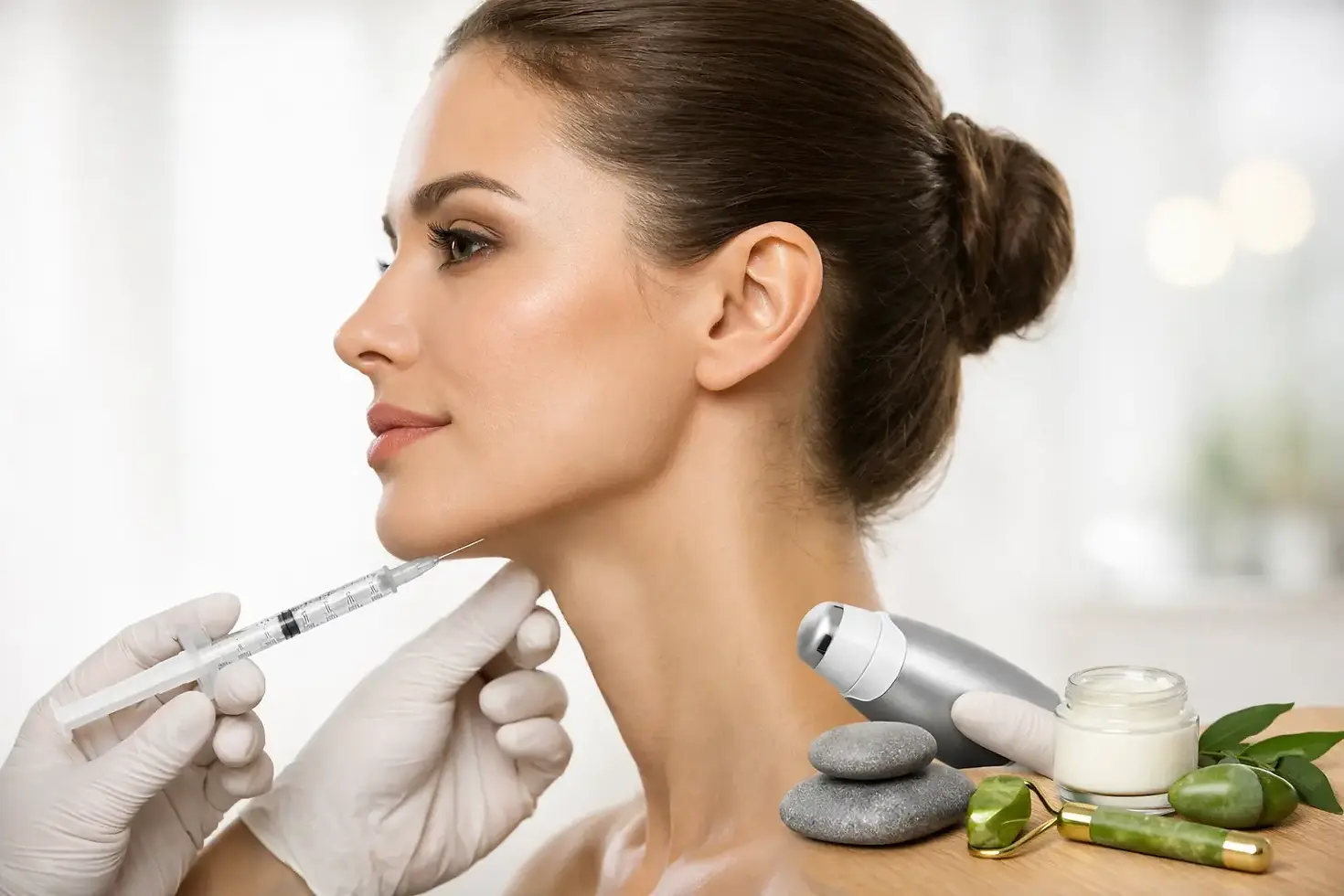
Best Treatments for Natural Jawline Definition
- Rossella Angelillis
- Aug 15
- 5 min read

A sharper jawline is not always about creating a dramatically different face. For many people, it is about restoring the definition that has softened with time, balancing the profile, or reducing the appearance of a heavy lower face. The best treatments for jawline definition depend on why the jawline has lost clarity in the first place - and that is why a tailored clinical assessment matters more than a one-size-fits-all treatment.
A considered approach can create a more refined transition from chin to neck while protecting the natural character of your face. The aim should be a rested, balanced result that feels like you, not a trend-led template.
What affects jawline definition?
The jawline is shaped by far more than the line of the mandible. Chin projection, cheek support, facial fat distribution, skin quality, muscle activity and bone structure all influence how defined it appears. Ageing can reduce collagen and elastin, allowing the skin and soft tissue around the lower face to descend. This may contribute to early jowling, looser skin and a less distinct facial contour.
For others, the issue is structural rather than age-related. A recessed or under-projected chin can make the jaw appear less defined from the front and side, even when the skin is firm. A wider masseter muscle, often linked with clenching or grinding, can also create a squarer lower-face shape.
This is why the same treatment is not right for every concern. Adding dermal filler to a jawline affected primarily by skin laxity, for example, may not provide the elegant result a client expects. Equally, treating a broad masseter with filler when muscle activity is the key factor could add unwanted width.
The best treatments for jawline definition
Dermal filler for shape, projection and support
Strategically placed dermal filler is one of the most effective non-surgical options for enhancing jawline structure. A practitioner may use it along the jawline, at the angle of the jaw or within the chin to improve proportion and create a cleaner contour.
Chin enhancement is often an overlooked part of jawline treatment. A small improvement in chin projection can balance the profile and make the jawline appear more defined without needing excessive product along the sides of the face. For some clients, restoring support in carefully selected areas of the mid-face can also improve the lower-face contour indirectly.
The trade-off is that filler should be used with restraint. Overfilling can make the lower face look heavy or overly angular, particularly where there is already tissue descent. A skilled injector will assess your facial proportions, skin thickness and movement before recommending product placement. Results are visible immediately, although any minor swelling should settle before the final outcome is judged. Longevity varies according to the product used, metabolism and placement.
Advanced toxin treatment for a slimmer lower face
If a prominent masseter muscle is contributing to a square or wide lower-face appearance, anti-wrinkle injections can be used to relax this muscle gradually. This treatment is commonly called masseter slimming and may be particularly suitable for people who clench their jaw, grind their teeth or notice tension through the lower face.
Rather than adding definition directly, toxin treatment reduces the pull and bulk of an overactive muscle over time. The result can be a softer, more tapered facial shape, which may make the jawline appear cleaner and more balanced. It is not designed to treat loose skin or replace structural support, so careful diagnosis is essential.
Masseter treatment should always be planned conservatively and delivered by an appropriately qualified medical professional. The muscle plays a functional role in chewing, and dosing must respect both facial aesthetics and comfort. Results develop gradually over several weeks and require maintenance to preserve the effect.
Skin-tightening treatments for early laxity
Where the concern is crepey skin, mild sagging or early loss of firmness, device-led treatments can play a valuable role in a jawline plan. Treatments that use controlled energy to stimulate collagen may support skin tightening and improve the quality of the tissue around the lower face and neck.
These options tend to suit clients seeking subtle, progressive rejuvenation rather than an immediate sculpted change. They can be especially useful where someone is not ready for injectables, wishes to enhance the longevity of injectable results, or has mild laxity that filler alone cannot address.
Expectations matter here. Non-surgical skin tightening can improve skin quality and firmness, but it cannot replicate the result of a surgical neck lift where there is significant skin excess or pronounced jowling. The best approach may involve a course of treatment, with improvements emerging as collagen remodelling takes place over the following weeks and months.
Treating lower-face ageing with a combination plan
For many clients, the most natural-looking results come from combining treatments rather than relying on one procedure. A subtle chin enhancement may provide projection, modest jawline filler may restore contour, and a skin-focused treatment may address the laxity that makes the jawline appear blurred.
This layered approach should be paced appropriately. There is no advantage in treating every possible area in one appointment simply because it can be done. A staged plan allows your practitioner to see how your face responds, maintain proportion and make refinements only where they genuinely add value.
At Evervine Medical Aesthetics, this type of planning begins with a personalised consultation that considers facial balance, skin health, lifestyle and your preferred level of change. The right treatment should complement your features and fit comfortably within your wider rejuvenation goals.
What about fat beneath the chin?
Fullness beneath the chin can reduce the contrast between the jaw and neck, even when the jawline itself has good structure. This concern needs an honest assessment because it may be caused by localised fat, loose skin, posture, chin projection or a combination of factors.
Treatments intended to reduce submental fullness may be suitable for selected clients, but they are not interchangeable with jawline filler or skin tightening. If there is notable skin laxity, reducing fat without considering the skin may not produce the desired contour. Your medical history, anatomy and the degree of fullness should guide whether a non-surgical option is appropriate or whether a surgical opinion would be more realistic.
Why a medical consultation is essential
Jawline treatments are often shown as simple before-and-after transformations online, but the lower face is an anatomically complex area. Injectable treatment carries risks, including bruising, swelling, asymmetry and, rarely, serious vascular complications. Safety depends on detailed anatomical knowledge, high-quality products, sound clinical judgement and a clear plan for managing complications.
A consultation with a qualified Nurse Prescriber gives you the opportunity to discuss what is medically appropriate, not merely what is popular. You should be asked about your health, medications, previous aesthetic treatments, dental history, jaw clenching and expectations. Your practitioner should also explain the likely benefits, limitations, downtime and potential risks before you decide.
Be cautious of unusually low prices, treatment packages that promise dramatic results for everyone, or practitioners who recommend large volumes of filler without discussing chin support, skin laxity and facial proportion. Premium aesthetic care is not about using the most product. It is about using the right treatment, in the right place, for the right reason.
How to prepare for a jawline treatment consultation
Bring clear goals, but leave room for professional guidance. It can help to identify what you notice most: a weak side profile, jowls, lack of separation beneath the chin, a broad lower face or skin laxity. If you have photographs from several years ago, they may also help show whether the concern is related to ageing, weight change or your natural facial structure.
Avoid booking treatment immediately before an important occasion. Even carefully performed injectables can cause temporary swelling or bruising, and results from toxin or collagen-stimulating treatments take time to develop. Giving yourself adequate time supports a calmer experience and more realistic decision-making.
A well-defined jawline should never come at the cost of looking overtreated. The most satisfying result is often the one that brings your features back into balance so naturally that people simply notice you look refreshed, confident and well.


Comments